IA 첨삭 패키지
ToK 첨삭 패키지
커리큘럼
자주묻는질문
인재채용
Mentoring Program Curriculum (1)
/
Subjects
/
Chemistry
수학
영어
화학
생물
경제
전시회 Exhibition
에세이 Essay
일회성 첨삭
방학특강
정규반
Mentoring Program Curriculum (1)
/
Subjects
/
Chemistry
IA 첨삭 패키지
수학
영어
화학
생물
경제
ToK 첨삭 패키지
전시회 Exhibition
에세이 Essay
일회성 첨삭
커리큘럼
방학특강
정규반
자주묻는질문
인재채용
Chemistry
태그
갤러리 보기
Gallery
Search
Topics
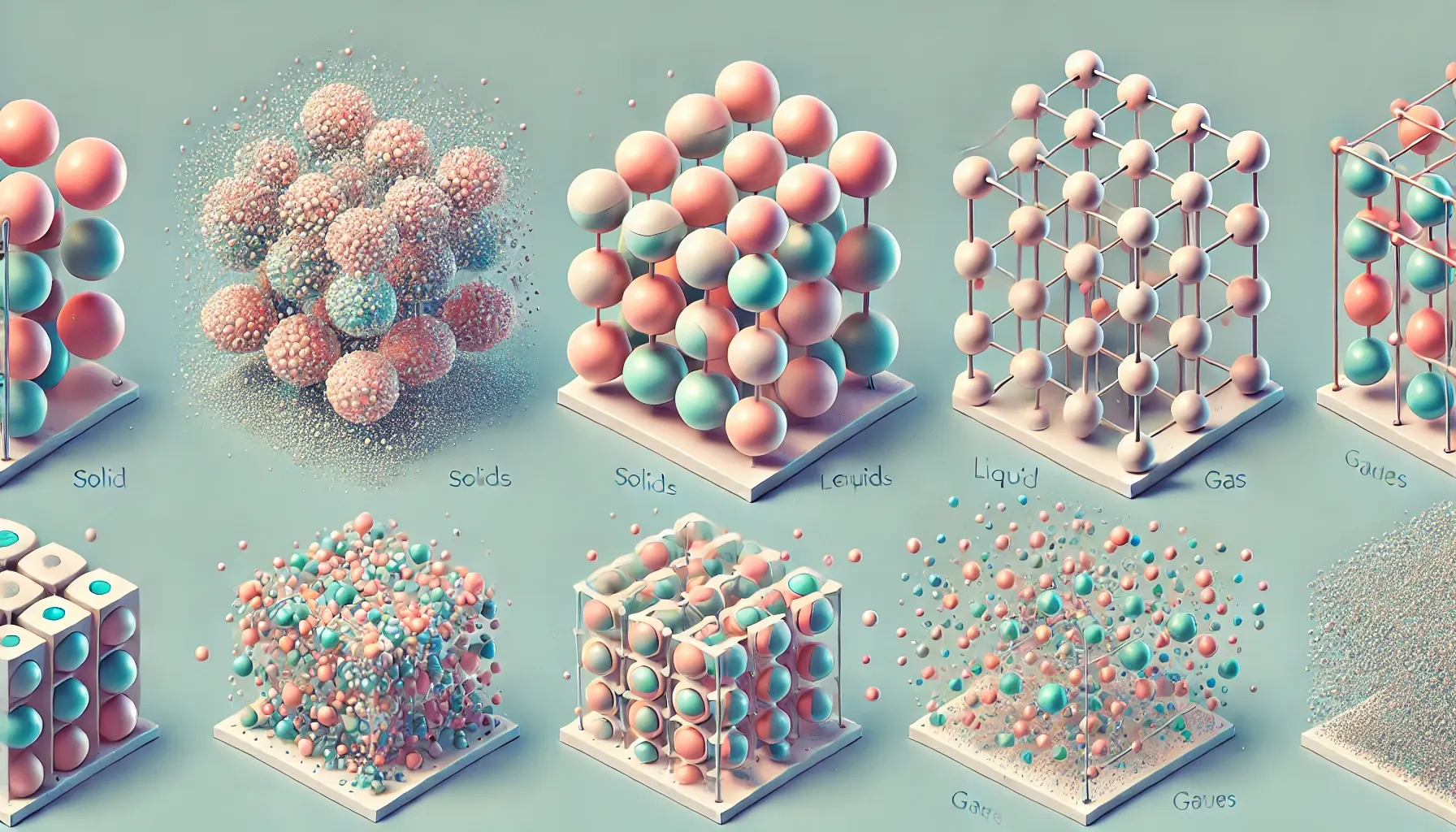
1.1 Introduction to the particulate nature of matter
Atom:
basic building block of matter that can neither be created nor destroyed
•
Described in Dalton's Atomic Theory
Element:
a chemical species that cannot be further decomposed by chemical reaction
•
Elements have the same number of protons in their nuclei
S1.
Models of the particulate nature of matter
1.1 Measuring enthalpy changes
1.2 Energy cycles in reactions
1.2 Energy cycles in reactions (AHL)
1.3 Energy from fuels
1.4 Entropy and spontaneity* (AHL)
R1. What drives chemical reactions?
2.1 The ionic model
2.2 The covalent model
2.2 The covalent model (AHL)
2.3 The metallic model
2.4 From models to materials
2.4 From models to materials (AHL)
S2. Models of bonding and structure
2.1 How much? The amount of chemical change
2.2 How fast? The rate of chemical change
2.2 How fast? The rate of chemical change (AHL)
2.3 How far? The extent of chemical change
2.3 How far? The extent of chemical change (AHL)
R2. How much, how fast and how far?
3.1 The periodic table: Classification of elements
3.1 The periodic table: Classification of elements (AHL)
3.2 Functional groups: Classification of organic compounds
3.2 Functional groups: Classification of organic compounds (AHL)
S3. Classification of matter
R3.1. Proton transfer reactions
R3.1 Proton transfer reactions (AHL)
R3.2 Electron transfer reactions
3.2 Electron transfer reactions (AHL)
R3.3 Electron sharing reactions
R3.4 Electron-pair sharing reactions
3.4 Electron-pair sharing reactions (AHL)
R3. What are the mechanisms of chemical change?


.gif&blockId=69f30372-0770-4967-95fa-043a602f0bec)